

In Flashduty On-call
You can get the integration push URL in either of the following ways.Use a dedicated integration
Choose this option if all alerts go to one channel. It’s the simpler setup.View dedicated integration setup steps
View dedicated integration setup steps
- In the Flashduty console, select Channel and open a channel
- Select Configuration → Integrations → Private integration, then click Add integration
- Select Sentry integration and click Save to generate a card
- Open the generated integration card and copy the Push URL
Use a shared integration
Choose this option if you need to route alerts to different channels based on the alert payload.Configure in Sentry
Sentry provides two types of alert mechanisms: Issue Alerts and Metric Alerts. While Issue Alerts support notifications through WebHooks in Integrations, Metric Alerts are limited to using Internal Integration for alert notifications. Notably, Internal Integration works with both Metric Alerts and Issue Alerts. Given the versatility of Internal Integration, we’ve chosen to standardize on this approach rather than relying on WebHooks separately, thus simplifying alert notification configuration.1
Create an Internal Integration in Sentry
Where: Sentry › Settings › Developer Settings › Custom Integrations › Create New Integration › Internal IntegrationIn older Sentry versions the entry is Settings → Custom Integrations.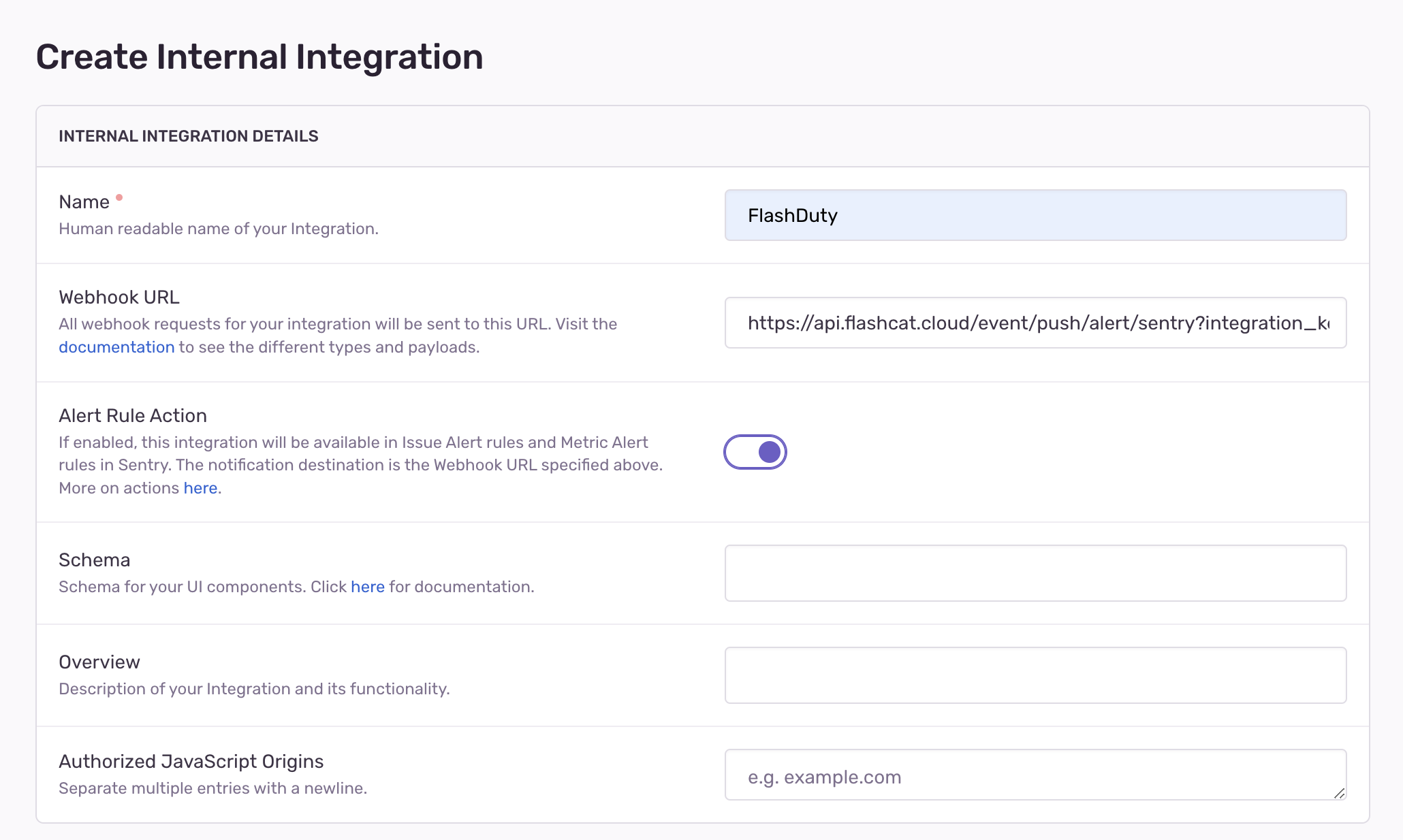 After configuration, click Save Changes to complete the setup.
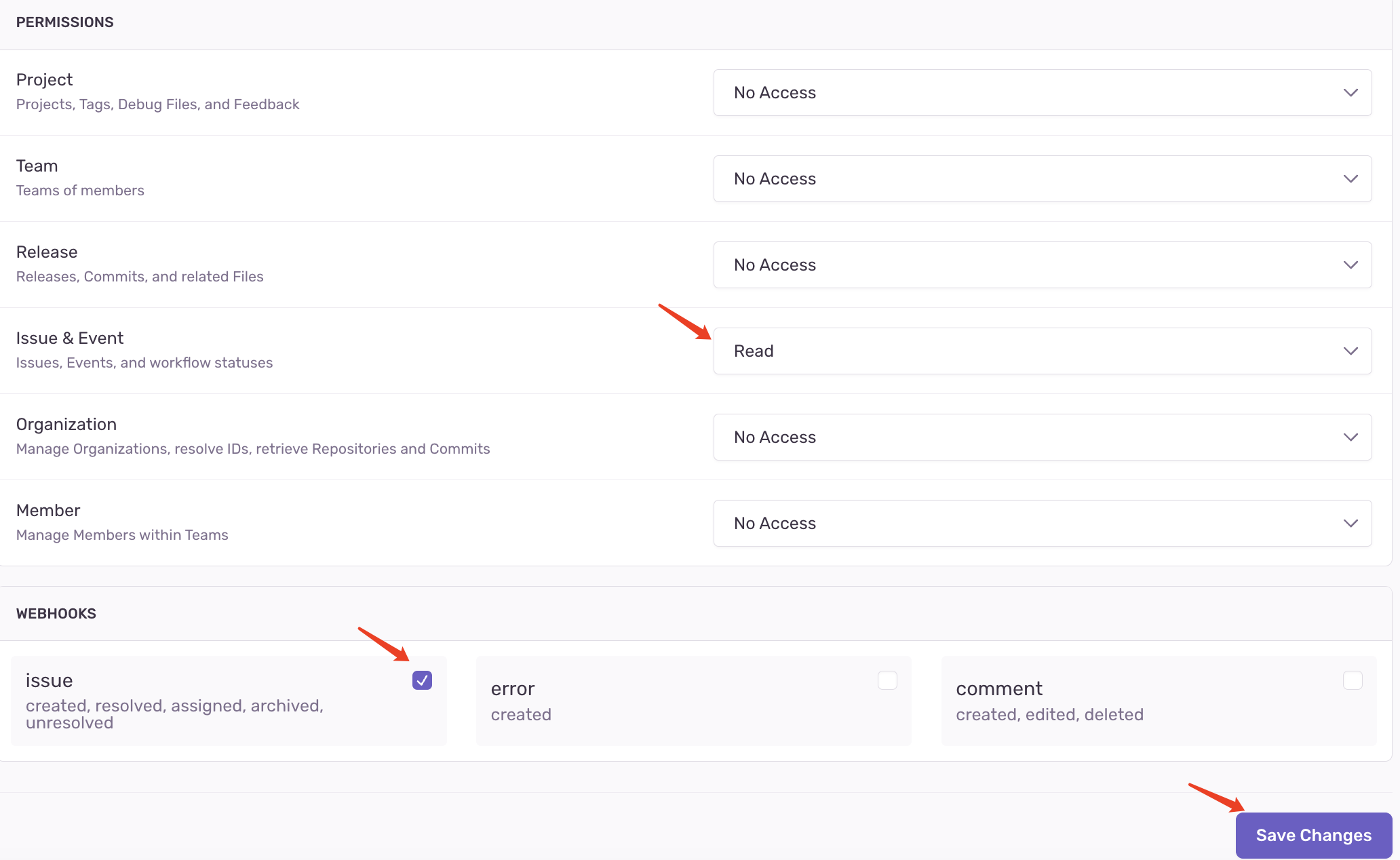 Special notes about WEBHOOKS configuration:
After configuration, click Save Changes to complete the setup.Special notes about WEBHOOKS configuration:- After checking issue, Flashduty can receive resolved events for issues, meaning when manually triggering resolved for an issue in the issue list, we will automatically recover the associated incident in Flashduty.
- Other issue events such as create, assigned, archived, and unresolved are not supported.
- If error and comment are also checked, Flashduty will not receive or process these types of events.
2
Use Flashduty in a Sentry alert rule
Where: Sentry › Alerts › Create Alert
-
Select the type of Alert to create, such as Issue.
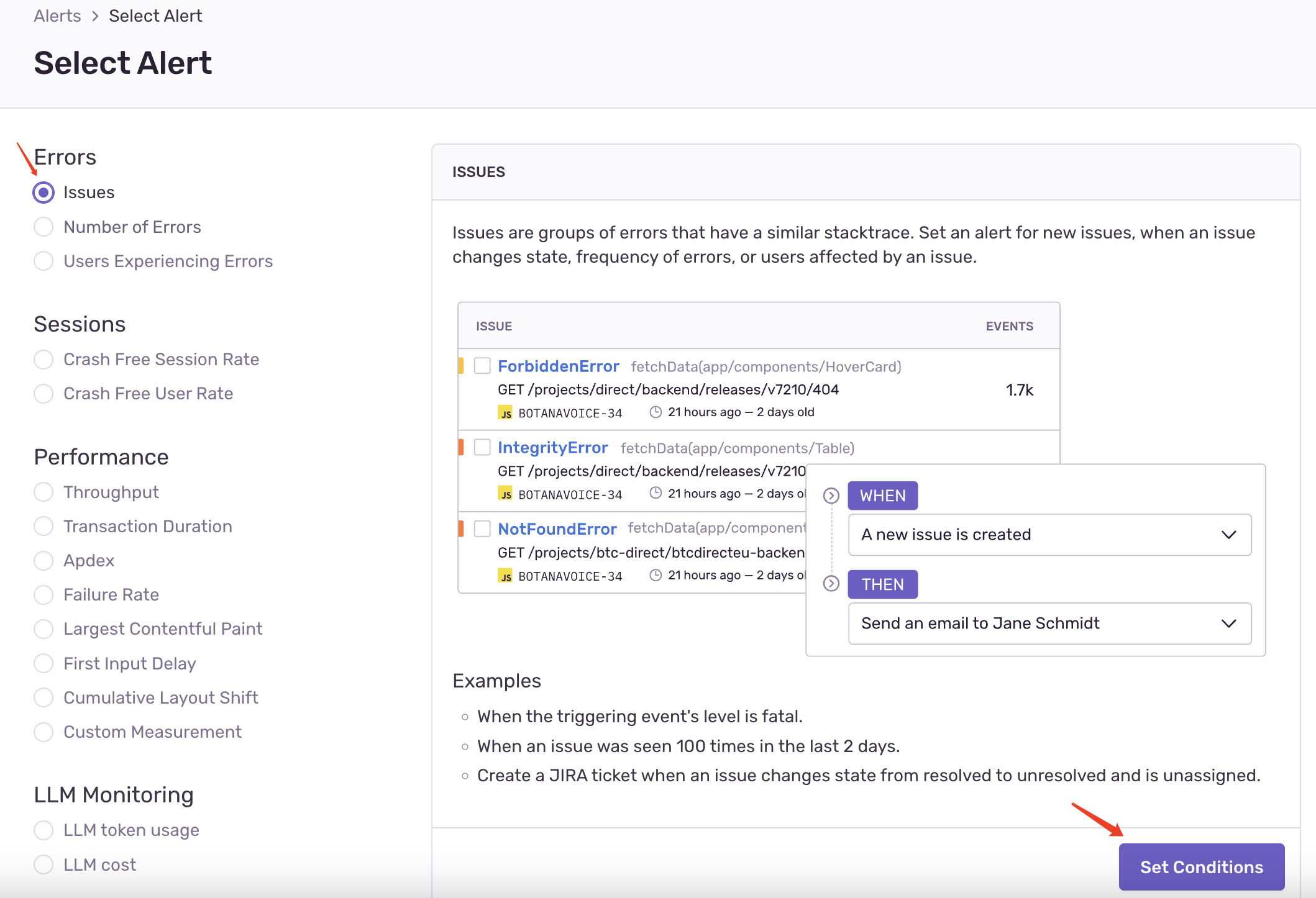
- Configure trigger conditions as needed.
-
Under THEN perform these actions, Add action and select Send a notification via.
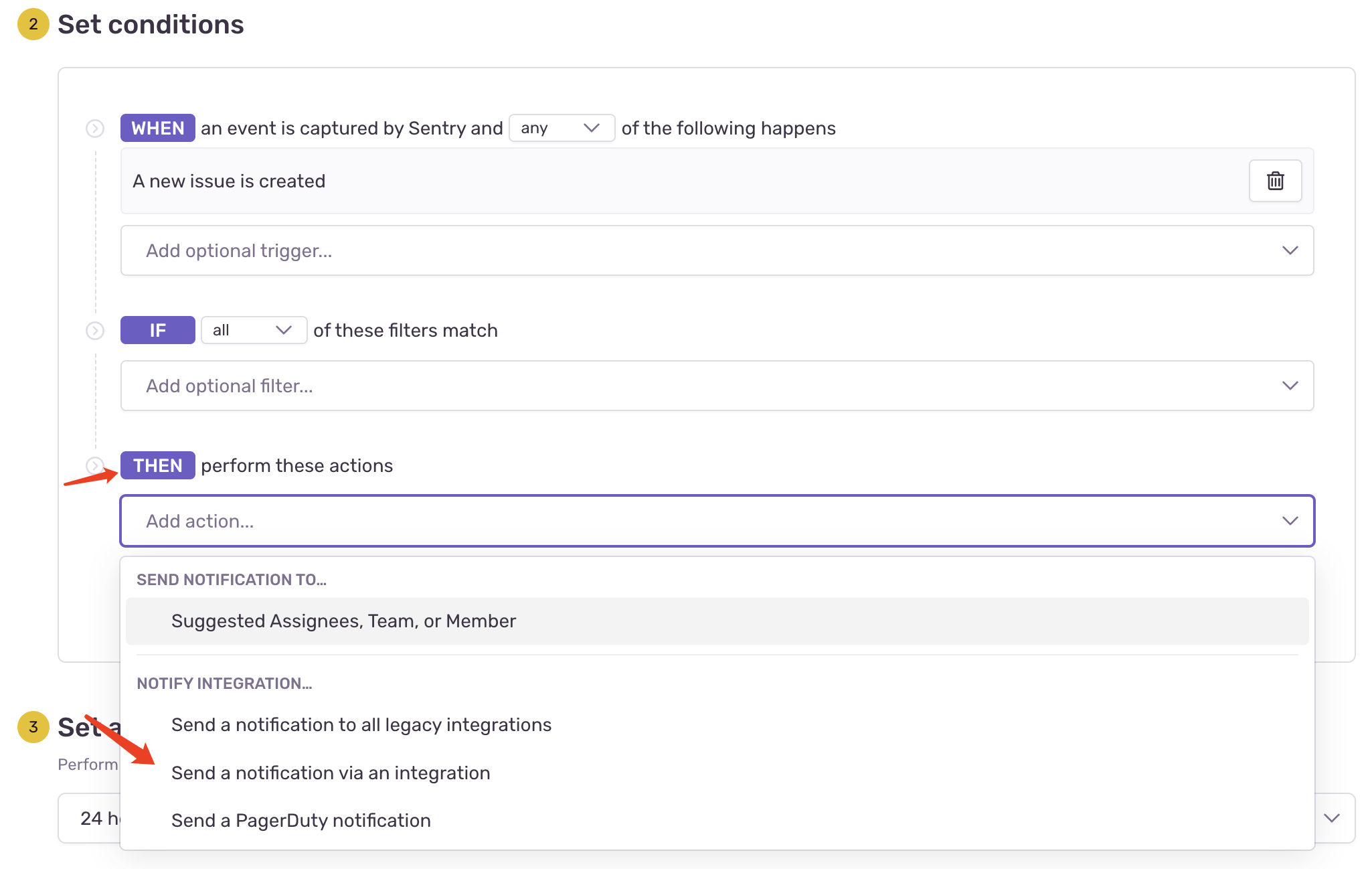
-
Select the Flashduty integration added above as the notification channel.
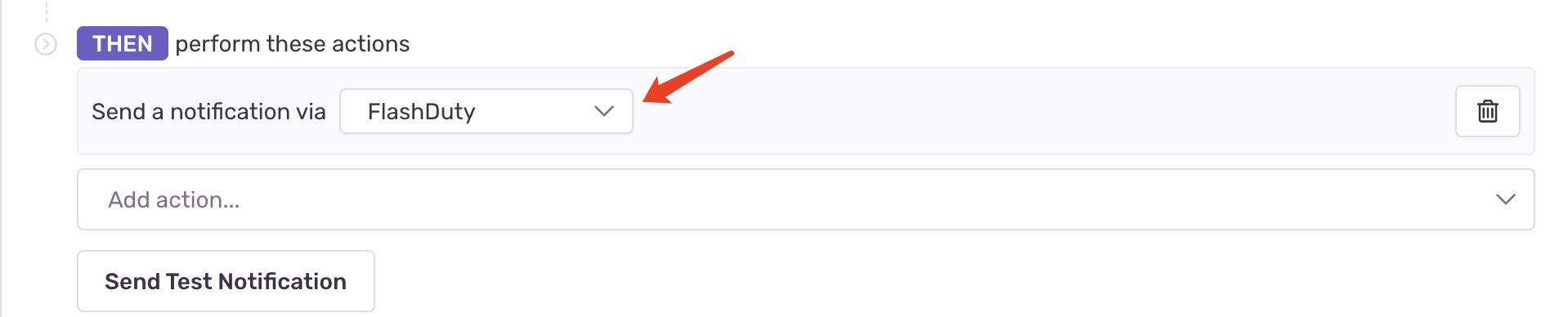
- Configure other options as needed and click Save Rule.
3
Trigger a real alert and verify
Let the rule match a real issue or metric alert. A few seconds later, the integration in Flashduty shows a Latest event time, which means the setup works. Then mark that issue as resolved in Sentry’s issue list and confirm the matching Flashduty alert recovers.
Status and severity
Alert Key and recovery
Flashduty computes the Alert Key from the object Sentry pushes:metric_alert.id for a metric alert, event.issue_id for an issue alert, and issue.id for an issue-resolved event. A notification whose action is resolved recovers the matching alert; a notification whose action is not in the table above (for example created or assigned) is rejected.